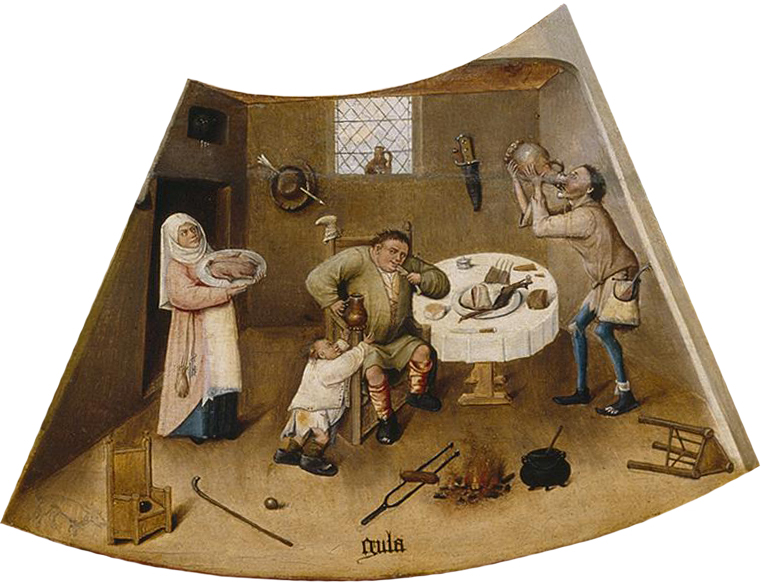
What a high Gluttony score looks like
A score of 9–12 usually means stopping is the hard part, not starting. You are generous with yourself, you say yes to more easily than no, and you rarely regret the first portion. The test asks about food and screens as well as money and time, because the pattern is the same in each.
Four everyday signs
- You eat standing up at the fridge and call it a taste.
- One more episode is a decision you make five times a night.
- You finish the bag because leaving a bit feels pointless.
- You like the plan for tomorrow more than the plan for tonight.
What it is good for
Gluttony is the most sociable sin. It is why you are the person who orders the good thing, who knows the restaurant, who makes an ordinary Tuesday feel like something. A person with no gluttony at all is usually a difficult dinner guest.
Where it starts costing you
The cost is the margin. Every good thing you can take past its own limit takes a little of tomorrow's energy with it, and the bill arrives later in a form that is hard to connect back to the decision.
How it interacts with the other sins
Gluttony and sloth are the most common pair on the test — both are about what you do with an available moment. Gluttony with greed is the strange one: you spend freely and then worry about the balance in silence. Gluttony with lust says yes to the second and third round of anything at all.
Get your numbers with the free 7 deadly sins test, then read sloth and greed.