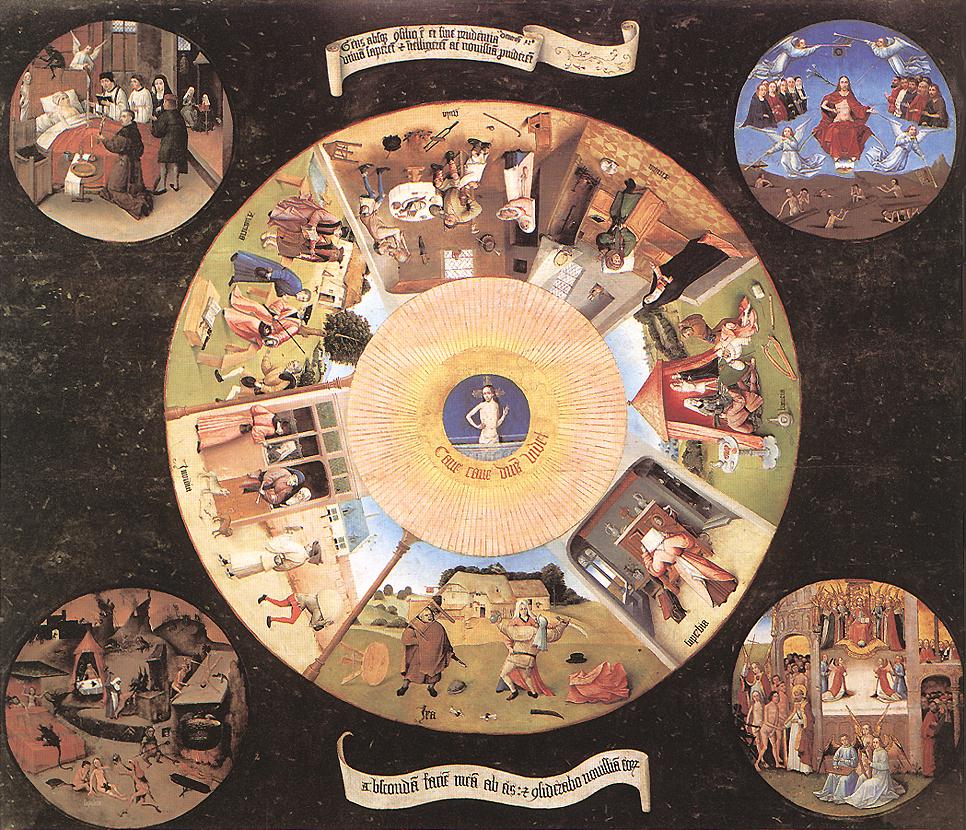
The list, in order
| # | Sin | Latin | What it actually covers |
|---|---|---|---|
| I | Pride | Superbia | Needing to be above, right, seen |
| II | Greed | Avaritia | Keeping more than you need |
| III | Lust | Luxuria | Wanting outrunning judgement |
| IV | Envy | Invidia | Measuring your life against another |
| V | Gluttony | Gula | Continuing past the point of enjoyment |
| VI | Wrath | Ira | Anger arriving before thought |
| VII | Sloth | Acedia | The quiet refusal to start |
Where the list comes from
The idea starts with the desert monastic tradition of the fourth century, where the monk Evagrius Ponticus wrote about eight harmful thoughts — including acedia, a kind of spiritual listlessness that later became sloth. In the sixth century Gregory the Great compressed the list into seven and put pride at the root of the others, which is why pride is usually numbered first.
The version most people know today arrived through medieval teaching and, much later, through Dante's Divine Comedy, which organised the seven as terraces on a mountain in purgatory — with pride at the bottom and lust at the top. That ordering is literature, not doctrine, and different traditions number the sins differently: some older lists include sadness or vainglory instead of sloth.
The sin-and-virtue pairs
Each sin was traditionally paired with a virtue meant to counter it. If a sin scores high for you, the virtue beside it is the practical version of "what to do about it".
| Sin | Countering virtue |
|---|---|
| Pride | Humility |
| Greed | Charity / generosity |
| Lust | Chastity |
| Envy | Kindness |
| Gluttony | Temperance |
| Wrath | Patience |
| Sloth | Diligence |
Why a personality test uses this list
The list is a surprisingly good set of axes for describing behaviour: it covers status, resources, desire, comparison, consumption, conflict and action. Those seven cover most of the small decisions an ordinary day asks you to make, which is why they work as quiz categories even if you have no interest in the theology.
Take the test
The 7 deadly sins test asks 21 scenario questions and scores you 0–12 on each sin above, then shows the bars side by side so you can see which one is running strongest. It takes about three minutes and needs no sign-up.