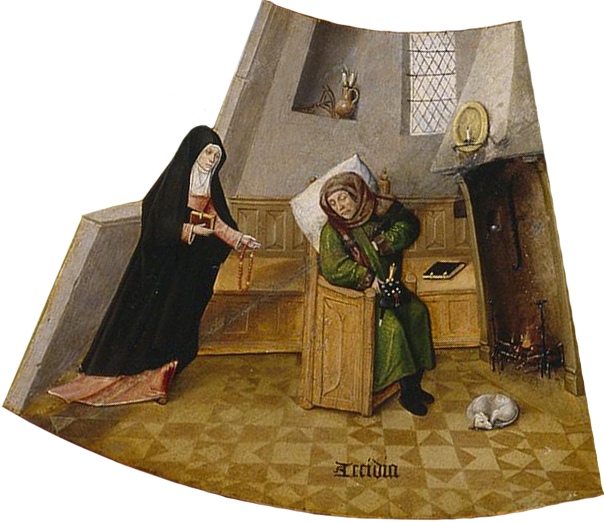
What a high Sloth score looks like
A score of 9–12 usually means you do not refuse things, you postpone them. The email is unanswered rather than declined, the Saturday task moves to Sunday and then to next weekend, and none of it feels like a decision. Acedia, the older name, was not about idleness at all: it was about the flatness that makes a worthwhile thing look pointless.
Four everyday signs
- You open the task, read it, close it, and call that starting.
- You plan in detail instead of beginning.
- You wait for the mood that never arrives.
- You are busy all day and the one thing that mattered is untouched.
What it is good for
Sloth is a brake, and brakes matter. It is why you did not send the message at midnight, did not take the job that would have been wrong, and did not fill every hour of your week. People who score very low here often burn out, because nothing in them says stop.
Where it starts costing you
The cost arrives as interest: the postponed thing becomes more expensive each time you look at it, and after a while the avoidance itself takes more energy than the task would have. The second cost is invisible to everybody else, because nothing happened.
How it interacts with the other sins
Sloth with envy is the hard combination — a clear view of what you are missing plus very little motion, which is exactly the fuel envy burns. Sloth with gluttony is the cosiest pair on the test. Sloth with pride is the one that hides best: the standard is so high that starting feels pointless, so you don't start, and the standard stays intact.
Take the free 7 deadly sins test to see all seven scores side by side, then read envy and pride.